


Modern raw materials trading is no longer only about price or product quality. In an era of global geopolitical turbulence and growing environmental requirements, supply chain stability has become one of the most important factors of competitiveness.
Carmex Expert has been developing its own logistics model for years, combining sea, rail and road transport into one integrated system. This allows the company to ensure uninterrupted deliveries of biomass, coal and steel — both for the professional energy sector and heavy industry.
Modern Logistics as the Foundation of Energy Security
In the energy and industrial sectors, logistics is no longer just an operational function. It has become a key element of supply security, production continuity and long-term business stability.
A reliable logistics model must combine access to global sources, domestic buffer capacity, efficient transshipment and predictable final delivery. This is why Carmex Expert builds its supply chains as integrated systems — from the port, through rail terminals, to the customer’s plant gate.
In raw materials trading, the strongest supply chain is the one that can quickly adapt to market, transport and regulatory changes.
Three Pillars of Carmex Expert Logistics
Carmex Expert’s logistics model is based on three pillars which together create an efficient and scalable transport system.
Integrated Logistics Model
- Sea transport — global supply through selected ports,
- Rail transport — efficient inland movement and lower emissions,
- Road transport — flexible last-mile delivery in the JIT model.
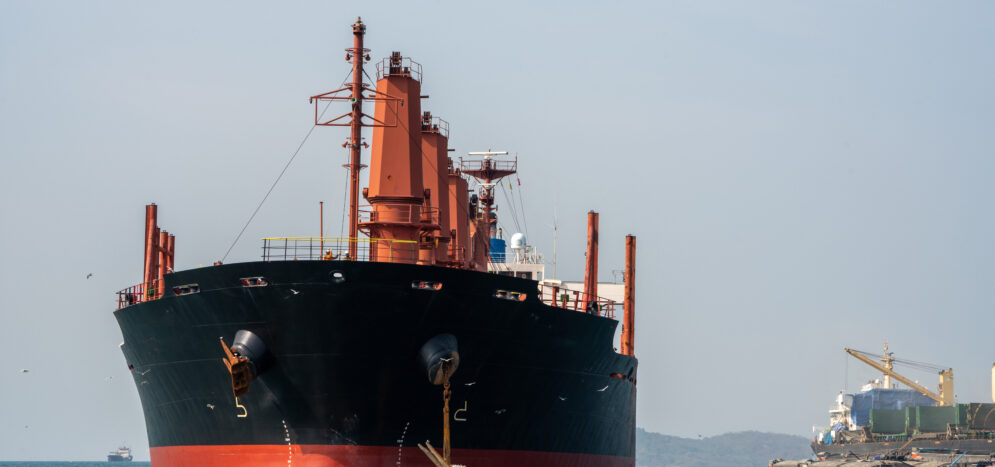
1. Sea Transport — Global Deliveries Through the Baltic
The first stage of the supply chain is maritime transport. Raw materials are imported by ocean-going vessels from ports in Southeast Asia — including Thailand, Vietnam and Malaysia — as well as from the Baltic Sea region.
The ports of Gdańsk and Świnoujście act as the main cargo reception points. There, biomass, coal and steel are unloaded, stored and prepared for further distribution.
Cooperation with logistics partners such as OT Logistics makes it possible to use terminals with a total capacity of more than 80,000 tonnes, giving customers supply continuity even during seasonal peaks.
2. Rail Transport — Efficiency and Ecology
The second pillar is rail transport, which forms the backbone of Carmex Expert’s domestic and international logistics.
The use of modern Laude HCPW containers allows up to 32 tonnes of cargo to be transported in a single cycle, without the need to reload the material between a wagon and a truck. This solution not only shortens transport time, but also reduces CO₂ emissions by up to 25% compared with traditional road transport.
Rail is also crucial for the execution of large contracts — especially in the energy sector, where delivery predictability directly affects production security. Carmex Expert has access to terminal infrastructure in key locations across the country, enabling the company to handle multiple directions at the same time.
3. Road Transport — Flexibility and Speed
The final stage of the chain is road transport, which ensures just-in-time distribution to industrial plants, combined heat and power plants and material depots.
Thanks to a network of verified carriers and continuous GPS monitoring, each delivery is controlled in real time.
Carmex Expert uses digital route planning tools that allow logistics to be optimized based on current road and weather conditions, minimizing costs and delays.
Intermodality — Combining All Modes of Transport
For many companies, new regulations mean serious administrative and logistics challenges. For Carmex Expert, they are a natural step toward further development.
The greatest strength of the Carmex Expert model is intermodality — the ability to move smoothly between different modes of transport without reloading the raw material itself.
HCPW containers used in the Laude system make it possible to transport cargo in the same unit from the vessel all the way to the final customer’s yard. This significantly reduces the risk of damage, contamination and material losses.
Thanks to intermodality, Carmex Expert can respond quickly to changing market needs by redirecting deliveries between ports, terminals and inland routes depending on the current commercial situation.
Modern Technologies and Digital Supply Management
In the age of digitalization, logistics does not end with transport. Carmex Expert has implemented a digital chain management system that allows every batch of goods to be monitored from loading at the port through to final delivery.
Data on raw material origin, quality, transport time and emissions are archived in the cloud and made available to customers in real time.
Thanks to integration with certification systems such as RED II, KZR INiG and SBP, the company is able to confirm not only product compliance, but also the environmental footprint of the entire logistics process.
This is particularly important for partners in the energy sector, who are required to report ESG indicators and the carbon footprint of their suppliers.
Supply Security — a Priority in Uncertain Times
In a situation of energy market instability, supply chain disruptions and geopolitical changes, Carmex Expert’s logistics model acts as a guarantee of security.
Thanks to diversified import directions and flexible transport modes, the company is resilient to fluctuations in sea freight prices and disruptions in inland transport.
High-capacity warehouses located in different regions of Poland make it possible to buffer raw materials and maintain supply continuity even during periods of disruption.
Sustainable Development in Practice
Carmex Expert develops logistics based on the principles of sustainable development. This means not only reducing transport emissions, but also investing in energy-efficient infrastructure and recycling transport packaging.
The company participates in research projects focused on optimizing fuel consumption in rail logistics and implementing low-emission solutions for heavy road transport.
As a result, Carmex Expert not only delivers raw materials, but also actively builds a modern and responsible logistics system for the energy and industrial sectors.
Summary: Logistics as a Competitive Advantage
In a world where supply stability determines market strength, logistics becomes a strategic asset. Carmex Expert shows that a modern approach to transport — based on intermodality, technology and environmental responsibility — can become a key element of success in raw materials trading.
Thanks to the synergy of ports, rail and road transport, the company ensures a reliable flow of energy and raw materials from source to final customer.
It is this comprehensiveness and control over every stage of the process that make Carmex Expert one of the leaders in raw materials logistics in Central Europe today.
Looking for Reliable Raw Materials Logistics?
Contact Carmex Expert and discuss sea, rail, road or intermodal logistics for your biomass, coal, steel or industrial raw material deliveries.
Contact us: [email protected]